You don’t have to walk through this alone.
Come sit with me for a moment.
This is a place to breathe, remember, and begin again.
"Some seasons are not meant to be survived bravely.
They are meant to be survived honestly.”
"What you lived through matters.
So does the way you’re still here.”
Hey, it’s Stacey.
I’m a writer, a wife, a mother, and a woman who has lived inside chronic illness, trauma, and a nervous system that learned to survive very hard things.
The books I write — starting with Dear John — come from that lived place.
They are letters from inside love, loss, caretaking, and the long, slow work of finding yourself again when life changes everything.
This space exists for readers who find themselves inside those stories and think,
Oh… that’s me.
If you’ve lived with illness, trauma, exhaustion, anxiety, or the quiet grief of a life that didn’t turn out the way you thought it would — you’re not imagining how heavy that is.
Here, you’ll find:
• Books that tell the truth about love, loss, and resilience
• Gentle mini-courses that help you settle your nervous system after reading
• Reflections and resources that help you make sense of what your body has been holding
I don’t believe in fixing people.
I believe in understanding them.
Your nervous system, your symptoms, your overwhelm — they all have stories behind them. And when we listen instead of forcing, something begins to soften.
This isn’t about becoming someone new.
It’s about coming back to who you were before you had to be so strong.
So if you’re here because a book led you,
or because your body led you,
or because you’re simply tired…
Welcome. I am so happy you are here!
Where healing begins with being understood!
The stories I write come from a life shaped by chronic illness, trauma, and grief — but also by love, family, and the stubborn hope that something gentler is still possible. I don’t write because I have answers.
I write because I have lived inside the questions. What happens when your body no longer feels safe?
When love is changed by illness?
When the life you imagined disappears, and you have to build a new one with tired hands and a nervous system that’s been on high alert for too long? These books are a way of telling the truth about that. Not the shiny version.
The real one. Inside these pages — and the small companion offerings that live beside them — we talk about nervous systems, trauma, chronic illness, caregiving, and the quiet courage it takes to keep showing up when you’re exhausted. Not to push yourself.
But to begin listening. Because healing, in my experience, doesn’t start with becoming stronger.
It starts with becoming safer. This space is here for people who want to understand their bodies, their stories, and the ways they learned to survive — so they can slowly, gently begin to live from something steadier. You don’t have to be fixed to belong here.
You just have to be human.
Start Here
If you arrived because a book found you — or because your body finally said enough — this is a gentle place to begin.
The stories in the Dear Collection don’t just tell what happened.
They make space for what’s happening inside you as you read.
Alongside the books, you’ll find small companion offerings — reflections, audio guides, and mini-courses — created to help your nervous system settle, integrate, and feel less alone in what the stories stir up.
Together, they explore things like:
• Becoming aware of what your body is holding
• Learning how to listen to yourself with compassion
• Understanding your nervous system and its patterns
• Noticing when you’re overwhelmed — and how to soften back into safety
• Tending to emotions, exhaustion, and chronic stress
• Building a personal “toolkit” that supports steadier days
• Learning the language of your own yes, no, and maybe
• Making sense of triggers without judging yourself
None of this is about fixing you.
It’s about learning how to live inside yourself with more kindness, clarity, and steadiness — especially after trauma, illness, or long seasons of survival.
You can begin with a book.
You can begin with a small practice.
You can begin right where you are
When you’re ready, there’s more waiting for you.
Small companions to walk beside the stories.
Some stories need a little space to settle.
You’ll find that space here.
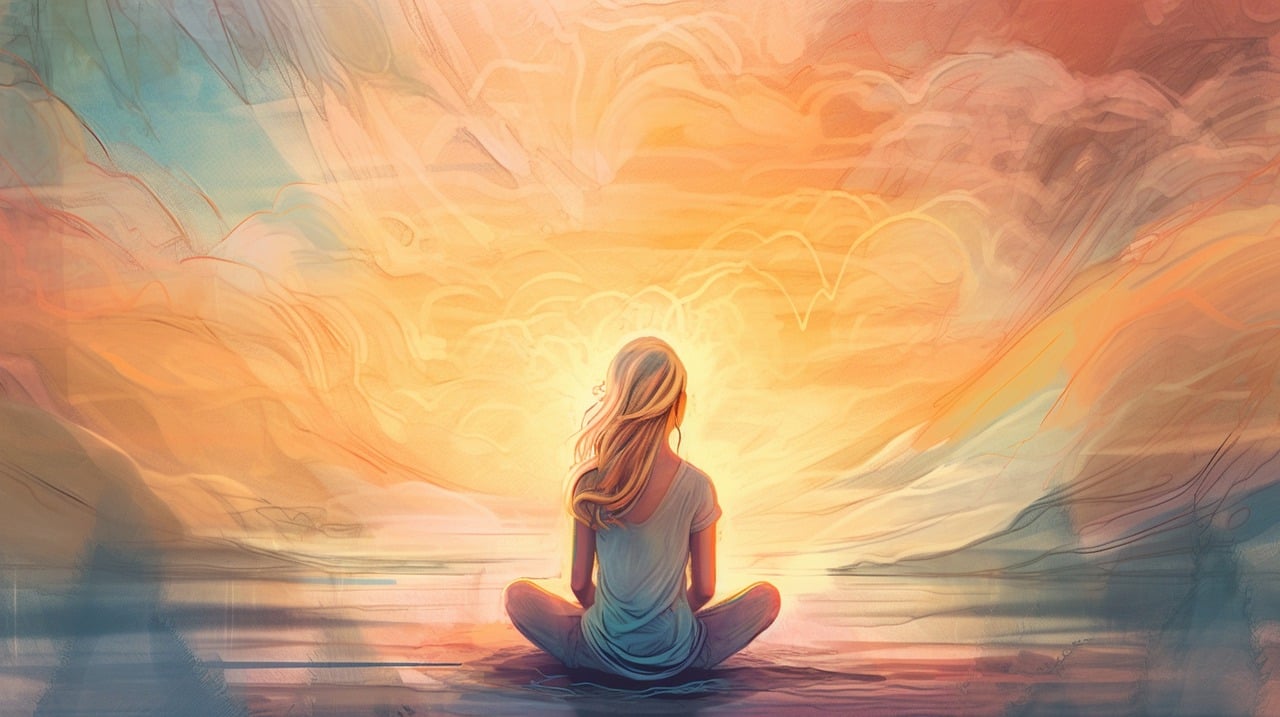
The Beginning of my Spiritual Healing Journey
My Spiritual Healing Journey: A Return to the Body, Not Away from It
My Spiritual Healing Journey
When Spirituality Helped Me Survive — and Then Quietly Kept Me Stuck
I was never one to believe in God.
I couldn’t reconcile the idea of a loving God with the amount of suffering I experienced as a child. If God existed, why had I been surrounded by so many unwell humans when I was so small—too small to protect myself, too small to advocate for my own safety?
And yet… I was open.
I wanted there to be more.
I wanted to believe life could hold peace, kindness, love, and contentment.
I wanted hope.
So, I stayed quiet. I stayed small.
I learned early that being “too much” was an inconvenience.
I believed you should treat people the way you want to be treated.
I believed positivity created a positive life.
I believed that if things were going wrong, it must be because I wasn’t doing something right.
If my life wasn’t working, I must not be positive enough.
I twisted myself to fit others.
I tried to be everybody’s somebody.
And deep down, I believed that if I did that well enough, maybe I would finally be worthy. Maybe I would be lovable. Maybe I would be chosen.
The Pressure to Stay Positive
When I was introduced to The Secret, I was immediately intrigued.
The idea of the law of attraction—like attracts like—fit perfectly with how I already viewed the world.
If you stayed positive, you would receive a positive life.
If you didn’t see results, you weren’t doing it right.
Your life was a reflection of you.
And mine wasn’t great.
So, I tried harder.
I wrote gratitude lists.
I journaled what I wanted as if I already had it.
I carried the responsibility for everything—my life, other people’s emotions, outcomes, failures.
Do better, Stacey.
As I explored more spiritual teachers and authors, the message stayed the same:
If I faltered, if I felt negative, if I doubted, then my life would reflect that.
Every day became a quiet internal chant of:
You’re not doing enough.
You’re not spiritual enough.
You’re not meditating enough.
You’re not journaling enough.
You’re not enlightened enough.
It was exhausting.
Being human—with human emotions—felt like a spiritual failure.
There was shame in sadness.
Blame in struggle.
Pressure to transcend instead of feel.
And yes—there were ways I thrived.
Spirituality gave me language.
It gave me connection.
It helped me feel less alone.
But what it didn’t teach me was how to live inside my body.
What Spirituality Didn’t Teach Me
I began my spiritual healing journey nearly two decades ago, hoping to heal what felt broken inside of me. What I didn’t understand then was this:
I wasn’t broken.
I was wounded.
No one taught me about trauma.
No one taught me about the nervous system.
No one taught me that when you grow up in chronic stress, your body adapts to survive—and those adaptations don’t magically disappear through meditation or positivity.
I didn’t learn that emotions are messengers.
I learned to see them as obstacles.
I didn’t learn that healing meant coming back into my body.
I learned to rise above it.
As Gabor Maté says:
“It’s a psychic wound that leaves a scar. It leaves an imprint in your nervous system, in your body, and your psyche, and then shows up in multiple ways that are not helpful to you later on.”
I lived most of my life reacting to those scars—without understanding why.
When My Body Forced the Truth
In my late 40s, my body stopped whispering and started screaming.
I was diagnosed with Mast Cell Activation Syndrome, followed by autonomic nervous system dysfunction. My body began reacting as if everything—food, air, sensations—was dangerous.
And that was the moment I understood something I could no longer bypass:
I could meditate.
I could pray.
I could affirm.
I could trust the universe.
But none of it mattered without acknowledging the wounds my body was carrying.
My spirituality had been layered with spiritual bypassing and toxic positivity—and those patterns kept me stuck.
I gaslit myself into believing everything was my fault.
If I struggled, I wasn’t grateful enough.
If I suffered, I wasn’t learning the lesson.
If I hurt, I must be doing something wrong.
That isn’t healing.
That’s self-abandonment disguised as enlightenment.
The Turning Point
My daughter was the reason I finally called a therapist.
She wanted help. I told her she was fine.
And in that moment, I saw it clearly—she wasn’t fine.
And neither was I.
Therapy didn’t erase my spirituality.
It grounded it.
It helped me understand trauma responses, control patterns, people-pleasing, and why staying small once kept me safe.
I began to see how my need to manage everything—to keep everyone regulated—was about survival, not morality.
I wasn’t “too much.”
I was trying to feel safe.
A Different Kind of Spirituality
At 49, I now live a spirituality that has room for being human.
I no longer try to transcend my emotions.
I no longer shame myself for falling apart.
I no longer believe healing means perfection.
My spirituality now is gentle.
It doesn’t demand.
It doesn’t punish.
Positive affirmations, meditation, tapping (EFT), prayer—these are tools I use, not rules I must obey.
I allow myself to skip days.
I allow pain days.
I allow joy days.
I allow mess.
Because the highest form of spirituality is not escaping humanity—it’s inhabiting it.
You can’t pray trauma away.
You can’t positive-think your nervous system into safety.
You can’t enlightenment your way out of pain.
Healing happens when we stay present with our bodies and our truth.
My Present-Day Truth
I am a spiritual being and a human one.
I am light and shadow.
I am regulated some days and unraveled on others.
I am doing the best I can—with what I have—every single day.
And that is enough.
Spirituality should feel loving, not shaming.
Supportive, not pressurized.
Anchoring, not demanding.
If your spirituality is asking you to abandon yourself—it isn’t healing you.
I see you.
You’re not broken.
You’re not failing.
You’re human.
And that matters.
🩷